
Traveling through Japan felt less like visiting a place and more like returning to a way of seeing. From the stillness of mountain temples to the quiet rhythm of city mornings, there is a sense of balance everywhere — between care and imperfection, design and nature, silence and sound.
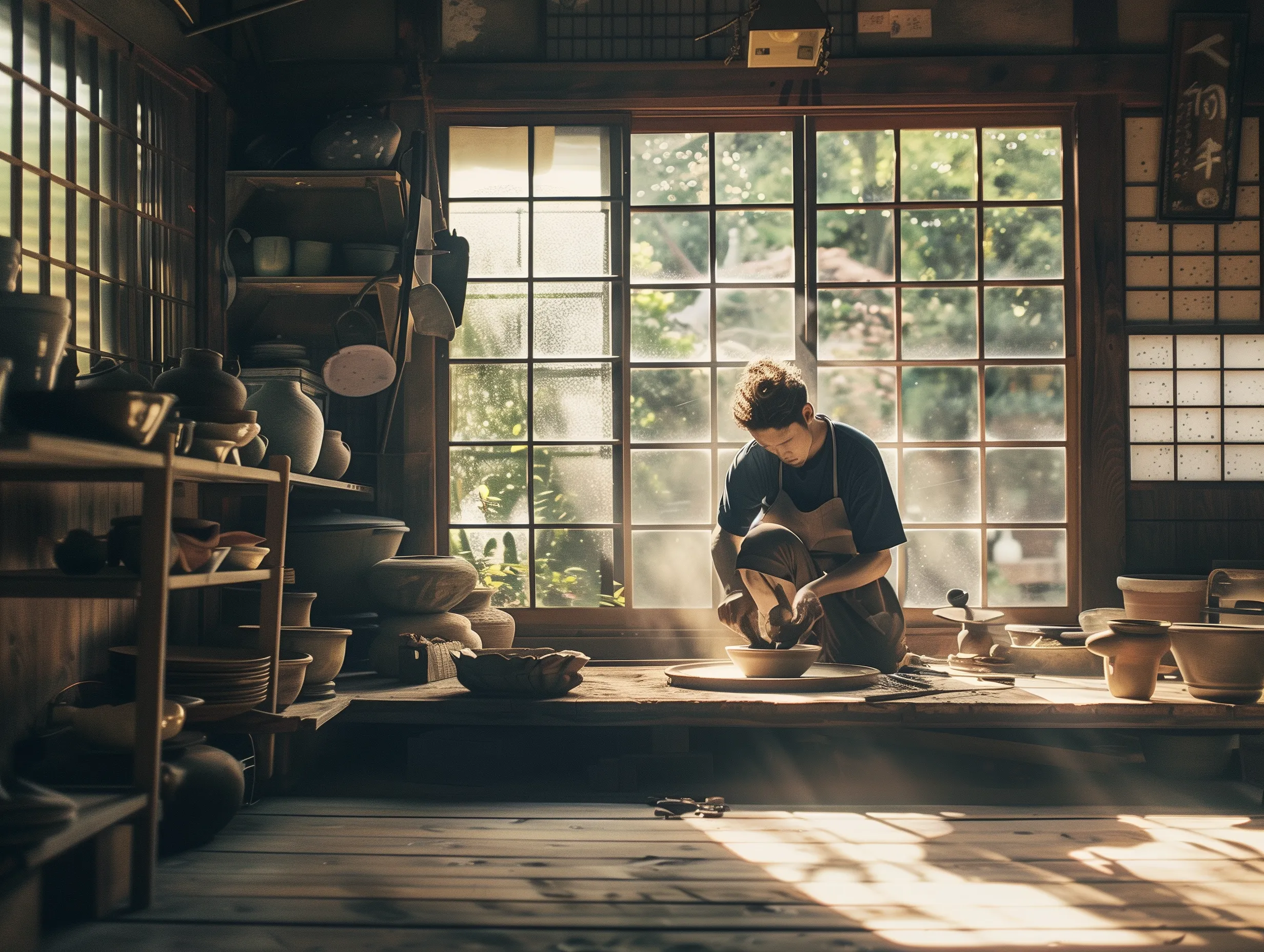
In Kyoto, I visited a small pottery workshop tucked behind a wooden gate. The potter, an elderly man with hands marked by decades of work, spoke little English, yet everything essential was understood. He moved with unhurried precision, letting clay spin on the wheel until it decided its own shape. Watching him, I recognised the same patience that guides the Fàilte studio — the belief that the maker is not in control, but in conversation with the material.
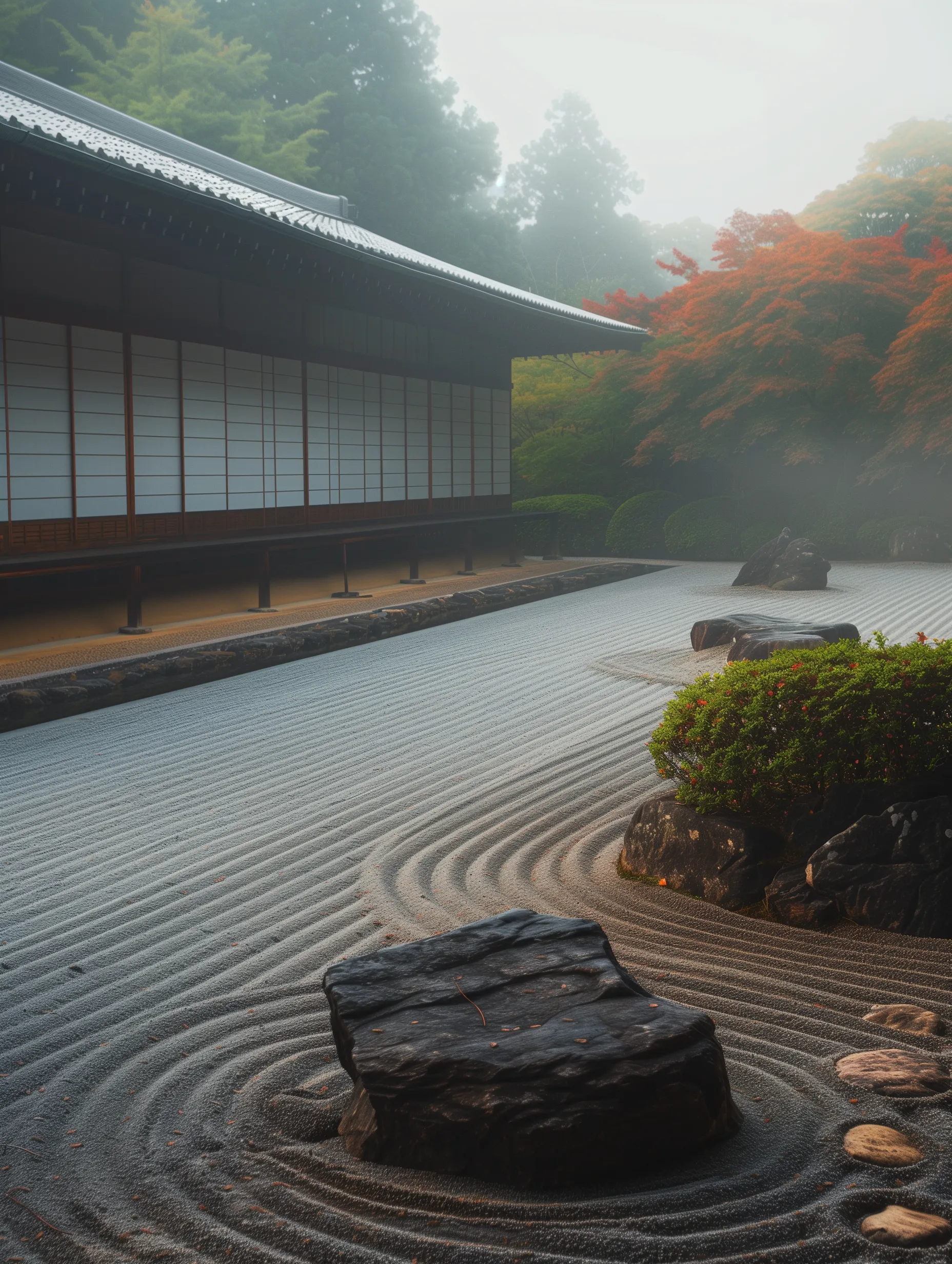
Later, walking through the gardens at Ryoan-ji, I was struck by the deliberate simplicity of stones and raked gravel. Each placement felt effortless, though nothing was accidental. The space held both order and freedom — a living expression of wabi-sabi, where beauty arises from restraint and time.
Everywhere I looked, this sensibility appeared: in the worn timber of teahouses, in the glaze of a cup, in the way a meal was served. The Japanese understanding of impermanence is not mournful but peaceful — a reminder that nothing lasts, nothing is finished, and nothing is perfect.
Returning to the Highlands, I carried that philosophy with me. The landscape here is different, but it speaks the same language. The shifting weather, the grain of the wood, the slow work of the hands — all of it belongs to the same rhythm. The studio, in its quiet way, became a continuation of that journey.
To make something by hand is to travel again and again through that landscape of patience — to learn, to observe, to yield. Japan reminded me that craft is not about mastery but mindfulness. Each vessel, each touch of glaze, is a conversation with time.
The work of Fàilte is not Japanese, but it is deeply shaped by Japan — by its silence, its imperfection, and its grace.
Traveling through Japan felt less like visiting a place and more like returning to a way of seeing. From the stillness of mountain temples to the quiet rhythm of city mornings, there is a sense of balance everywhere — between care and imperfection, design and nature, silence and sound.
In Kyoto, I visited a small pottery workshop tucked behind a wooden gate. The potter, an elderly man with hands marked by decades of work, spoke little English, yet everything essential was understood. He moved with unhurried precision, letting clay spin on the wheel until it decided its own shape. Watching him, I recognised the same patience that guides the Fàilte studio — the belief that the maker is not in control, but in conversation with the material.
Later, walking through the gardens at Ryoan-ji, I was struck by the deliberate simplicity of stones and raked gravel. Each placement felt effortless, though nothing was accidental. The space held both order and freedom — a living expression of wabi-sabi, where beauty arises from restraint and time.
Everywhere I looked, this sensibility appeared: in the worn timber of teahouses, in the glaze of a cup, in the way a meal was served. The Japanese understanding of impermanence is not mournful but peaceful — a reminder that nothing lasts, nothing is finished, and nothing is perfect.
Returning to the Highlands, I carried that philosophy with me. The landscape here is different, but it speaks the same language. The shifting weather, the grain of the wood, the slow work of the hands — all of it belongs to the same rhythm. The studio, in its quiet way, became a continuation of that journey.
To make something by hand is to travel again and again through that landscape of patience — to learn, to observe, to yield. Japan reminded me that craft is not about mastery but mindfulness. Each vessel, each touch of glaze, is a conversation with time.
The work of Fàilte is not Japanese, but it is deeply shaped by Japan — by its silence, its imperfection, and its grace.
Traveling through Japan felt less like visiting a place and more like returning to a way of seeing. From the stillness of mountain temples to the quiet rhythm of city mornings, there is a sense of balance everywhere — between care and imperfection, design and nature, silence and sound.
In Kyoto, I visited a small pottery workshop tucked behind a wooden gate. The potter, an elderly man with hands marked by decades of work, spoke little English, yet everything essential was understood. He moved with unhurried precision, letting clay spin on the wheel until it decided its own shape. Watching him, I recognised the same patience that guides the Fàilte studio — the belief that the maker is not in control, but in conversation with the material.
Later, walking through the gardens at Ryoan-ji, I was struck by the deliberate simplicity of stones and raked gravel. Each placement felt effortless, though nothing was accidental. The space held both order and freedom — a living expression of wabi-sabi, where beauty arises from restraint and time.
Everywhere I looked, this sensibility appeared: in the worn timber of teahouses, in the glaze of a cup, in the way a meal was served. The Japanese understanding of impermanence is not mournful but peaceful — a reminder that nothing lasts, nothing is finished, and nothing is perfect.
Returning to the Highlands, I carried that philosophy with me. The landscape here is different, but it speaks the same language. The shifting weather, the grain of the wood, the slow work of the hands — all of it belongs to the same rhythm. The studio, in its quiet way, became a continuation of that journey.
To make something by hand is to travel again and again through that landscape of patience — to learn, to observe, to yield. Japan reminded me that craft is not about mastery but mindfulness. Each vessel, each touch of glaze, is a conversation with time.
The work of Fàilte is not Japanese, but it is deeply shaped by Japan — by its silence, its imperfection, and its grace.