
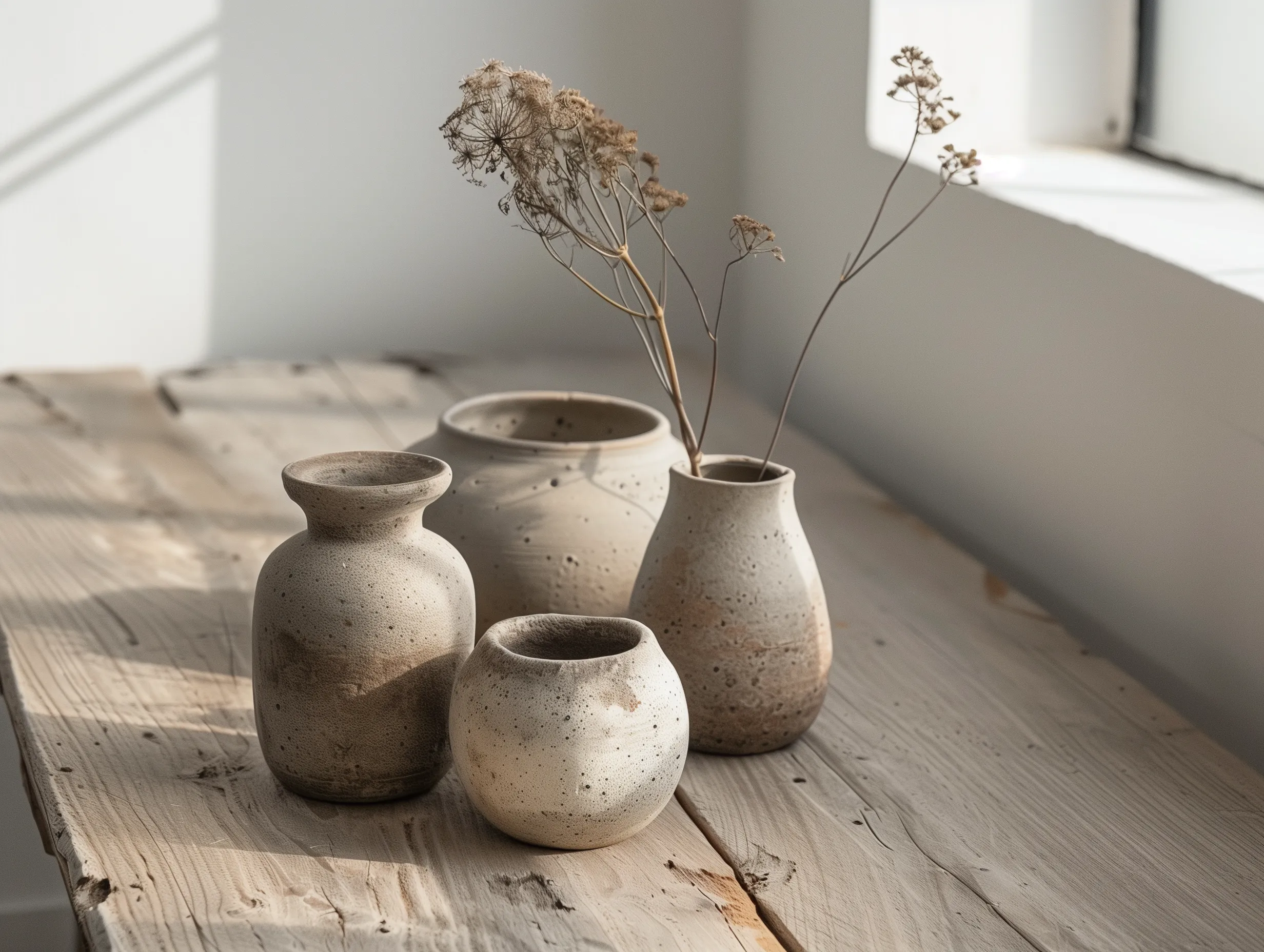
In the Scottish Highlands, where the land breathes through mist and stone, Fàilte was born from an idea of stillness. The studio began not as a pursuit of perfection, but as a response to it — an embrace of the irregular, the unhurried, and the deeply human traces left in clay.
Every vessel begins the same way: with raw earth. It is weighed, pressed, and shaped by hand, each gesture recording a quiet intention. Sometimes the glaze runs too thin, sometimes the surface reveals a mark that wasn’t planned — and in those moments, the philosophy of wabi-sabi comes to life. Imperfection becomes truth. Beauty arrives not through control, but through acceptance.
Scandinavian design offers a gentle counterbalance. Its restraint, order, and clarity give form to the instinctive gestures of Japanese craft. Together, they create a language of simplicity — where each line and curve holds purpose, and the absence of ornament allows space for calm.
This philosophy extends beyond the clay itself. The studio, nestled between mountain and water, mirrors the work that happens within. Light changes by the hour, and with it, the tone of the wood, the hue of the glaze, the mood of the maker. In winter, the kiln’s warmth fills the space with a soft hum; in summer, open windows invite the sound of wind and running water. The environment is not a backdrop, but a collaborator.
Every Fàilte piece — whether cup, bowl, or vase — carries the mark of time and touch. They are meant for use, not display; to be part of life’s small rituals. A morning cup of tea. A bowl of fruit shared in silence. A single flower is placed in a vessel by the window.
These acts are simple, but they anchor us. They remind us that beauty is not always found in what is new or flawless, but in what endures — what is shaped, mended, and lived with.
In the end, Fàilte is less about pottery and more about a way of seeing: a quiet acknowledgement that imperfection is not a flaw to correct, but a story to be told.
In the Scottish Highlands, where the land breathes through mist and stone, Fàilte was born from an idea of stillness. The studio began not as a pursuit of perfection, but as a response to it — an embrace of the irregular, the unhurried, and the deeply human traces left in clay.
Every vessel begins the same way: with raw earth. It is weighed, pressed, and shaped by hand, each gesture recording a quiet intention. Sometimes the glaze runs too thin, sometimes the surface reveals a mark that wasn’t planned — and in those moments, the philosophy of wabi-sabi comes to life. Imperfection becomes truth. Beauty arrives not through control, but through acceptance.
Scandinavian design offers a gentle counterbalance. Its restraint, order, and clarity give form to the instinctive gestures of Japanese craft. Together, they create a language of simplicity — where each line and curve holds purpose, and the absence of ornament allows space for calm.
This philosophy extends beyond the clay itself. The studio, nestled between mountain and water, mirrors the work that happens within. Light changes by the hour, and with it, the tone of the wood, the hue of the glaze, the mood of the maker. In winter, the kiln’s warmth fills the space with a soft hum; in summer, open windows invite the sound of wind and running water. The environment is not a backdrop, but a collaborator.
Every Fàilte piece — whether cup, bowl, or vase — carries the mark of time and touch. They are meant for use, not display; to be part of life’s small rituals. A morning cup of tea. A bowl of fruit shared in silence. A single flower is placed in a vessel by the window.
These acts are simple, but they anchor us. They remind us that beauty is not always found in what is new or flawless, but in what endures — what is shaped, mended, and lived with.
In the end, Fàilte is less about pottery and more about a way of seeing: a quiet acknowledgement that imperfection is not a flaw to correct, but a story to be told.
In the Scottish Highlands, where the land breathes through mist and stone, Fàilte was born from an idea of stillness. The studio began not as a pursuit of perfection, but as a response to it — an embrace of the irregular, the unhurried, and the deeply human traces left in clay.
Every vessel begins the same way: with raw earth. It is weighed, pressed, and shaped by hand, each gesture recording a quiet intention. Sometimes the glaze runs too thin, sometimes the surface reveals a mark that wasn’t planned — and in those moments, the philosophy of wabi-sabi comes to life. Imperfection becomes truth. Beauty arrives not through control, but through acceptance.
Scandinavian design offers a gentle counterbalance. Its restraint, order, and clarity give form to the instinctive gestures of Japanese craft. Together, they create a language of simplicity — where each line and curve holds purpose, and the absence of ornament allows space for calm.
This philosophy extends beyond the clay itself. The studio, nestled between mountain and water, mirrors the work that happens within. Light changes by the hour, and with it, the tone of the wood, the hue of the glaze, the mood of the maker. In winter, the kiln’s warmth fills the space with a soft hum; in summer, open windows invite the sound of wind and running water. The environment is not a backdrop, but a collaborator.
Every Fàilte piece — whether cup, bowl, or vase — carries the mark of time and touch. They are meant for use, not display; to be part of life’s small rituals. A morning cup of tea. A bowl of fruit shared in silence. A single flower is placed in a vessel by the window.
These acts are simple, but they anchor us. They remind us that beauty is not always found in what is new or flawless, but in what endures — what is shaped, mended, and lived with.
In the end, Fàilte is less about pottery and more about a way of seeing: a quiet acknowledgement that imperfection is not a flaw to correct, but a story to be told.